The Ultimate Guide to 3D Printing: Processes, Technologies, Applications & Future Potential
What is 3D Printing?
3D printing, also known as additive manufacturing, is the process of creating 3D objects from a digital model by building them layer by layer. Unlike traditional subtractive manufacturing methods that remove material from a solid block, 3D printing uses only the material required to form the object—minimizing waste and enabling design complexity.
🛠️How 3D Printing Works: Step-by-Step Process
1. Designing the 3D Model
Software Tools: Created using CAD (Computer-Aided Design) software such as Tinkercad, Fusion 360, or Blender.
File Formats: Models are saved in formats like STL or OBJ.
2. Slicing the Model
Slicing Software: Imported into programs like Cura or PrusaSlicer, which slice it into layers and convert it into G-code.
Settings: Adjust parameters like print speed, layer height, and infill density.
3. Preparing the Printer
Material Loading: Load filament (FDM) or resin (SLA) depending on the printer type.
Calibration: Level the print bed and ensure correct nozzle height.
4. Printing the Object
The printer constructs the object layer-by-layer, using:
FDM: Melts thermoplastic filament and extrudes it through a nozzle.
SLA: Uses UV laser to cure liquid resin.
SLS: Fuses powder particles using a laser.
5. Post-Processing
Remove print from the bed.
Finish with sanding, washing, curing, or painting depending on material and print type.
6. Final Output
The finished product might serve as a prototype, functional part, decorative item, or even a medical device.
🔍 Types of 3D Printing Technologies
Each 3D printing technology has unique features and use cases:
1. Fused Deposition Modeling (FDM)
How it works: Extrudes melted filament through a heated nozzle.
Pros: Affordable, widely available, ideal for prototyping.
Cons: Lower resolution; visible layer lines.
2. Stereolithography (SLA)
How it works: Uses UV laser to cure resin.
Pros: High detail and smooth finish.
Cons: Requires post-curing; resins can be costly.
3. Selective Laser Sintering (SLS)
How it works: Fuses powder using a high-powered laser.
Pros: Strong, durable parts; no support structures needed.
Cons: Industrial-scale and more expensive.
4. Digital Light Processing (DLP)
How it works: Projects light across an entire layer all at once.
Pros: Fast and detailed prints.
Cons: Limited build volume.
5. Multi-Jet Modeling (MJM)
How it works: Jets and cures photopolymer resins.
Pros: High detail and smooth surfaces.
Cons: Higher costs; extensive post-processing.
6. Binder Jetting
How it works: Applies a binding agent to layers of powder.
Pros: Good for large complex shapes and molds.
Cons: Parts often need post-treatment to strengthen.
7. Delta 3D Printers
How it works: Uses vertical arms and a round build area.
Pros: Fast and great for tall prints.
Cons: Requires advanced calibration; less stable.
What Can You Make With 3D Printing?
3D printing unlocks a world of creativity and utility. Here are some top categories:
✅ Prototypes
Functional or visual representations to test and refine products.
✅ Consumer Products
Customized toys, home decor, gadgets, and personalized items.
✅ Jewelry
Intricate designs, custom rings, prototypes for casting.
✅ Medical Devices
Prosthetics, dental appliances, anatomical models.
✅ Automotive Parts
Replacement components, concept prototyping.
✅ Aerospace Structures
Lightweight, high-strength parts and mission-specific tools.
✅ Architectural Models
Scaled structures to visualize buildings and cities.
✅ Fashion Items
Personalized footwear, wearable art, and accessories.
✅ Educational Tools
Interactive models for science, math, history, and engineering.
✅ Art & Sculpture
Bespoke sculptures, installations, and interactive displays.
✅ Home Repair Tools
Custom tool holders, fixings, and fittings.
Materials Used in 3D Printing
Plastics (PLA, ABS, PETG) – Flexible, affordable, and widely available.
Resins – For high-detail prints in SLA and DLP.
Metals – Used in industrial printing for durable, functional parts.
Composites – Blends of materials for enhanced strength, flexibility, or appearance.
✅ Advantages of 3D Printing
3D printing brings transformative benefits to every stage of product development and manufacturing:
Rapid Prototyping – Shorten development cycles with quick iterations.
Customization – Create personalized products with ease.
Minimal Waste – Additive process uses only required materials.
Distinct Geometries – Print complex or impossible shapes not feasible with traditional methods.
Cost-Effective for Small Volumes – Avoid molds and tooling for short-run production.
Flexible Supply Chains – On-demand, localized production reduces shipping time and costs.
Expanding Material Options – From everyday thermoplastics to advanced composites, resins, and metals.
⚠️ Challenges of 3D Printing
Despite its potential, 3D printing also faces limitations:
Speed – Slower than traditional methods for large-scale production.
Material Limitations – Not all materials offer industrial-grade strength.
Surface Finish – May require extensive finishing for smoother textures.
Size Constraints – Some machines have limited build volumes.
Cost of Equipment – High-end printers and materials can be expensive.
Skill Requirements – Technical expertise may be needed to design and operate effectively.
Quality Consistency – Ensuring repeatable accuracy remains a challenge.
Why 3D Printing Is the Future of Innovation
3D printing is more than just a tool—it’s shaping the future of manufacturing, design, and human creativity.
🌍 Sustainability
Reduces waste and shipping emissions.
Encourages local, on-demand production.
💡 Innovation Acceleration
Enables faster R&D through quick prototyping and real-time iteration.
🧬 Medical Breakthroughs
Revolutionizes prosthetics, implants, and even bio-printed organs.
🎓 Education & Accessibility
Provides hands-on learning experiences and levels the playing field for learners and inventors.
📈 Economic Opportunities
Reduces startup costs and opens doors for small-scale manufacturers and entrepreneurs.
🧠 Conclusion
3D printing is redefining what’s possible in nearly every industry—from manufacturing and medicine to education and the arts. With growing accessibility, expanding material libraries, and improving technologies, this powerful tool is paving the way for a more creative, efficient, and personalized future.
Whether you're a hobbyist, educator, designer, or business innovator, now is the time to explore what 3D printing can do for you.
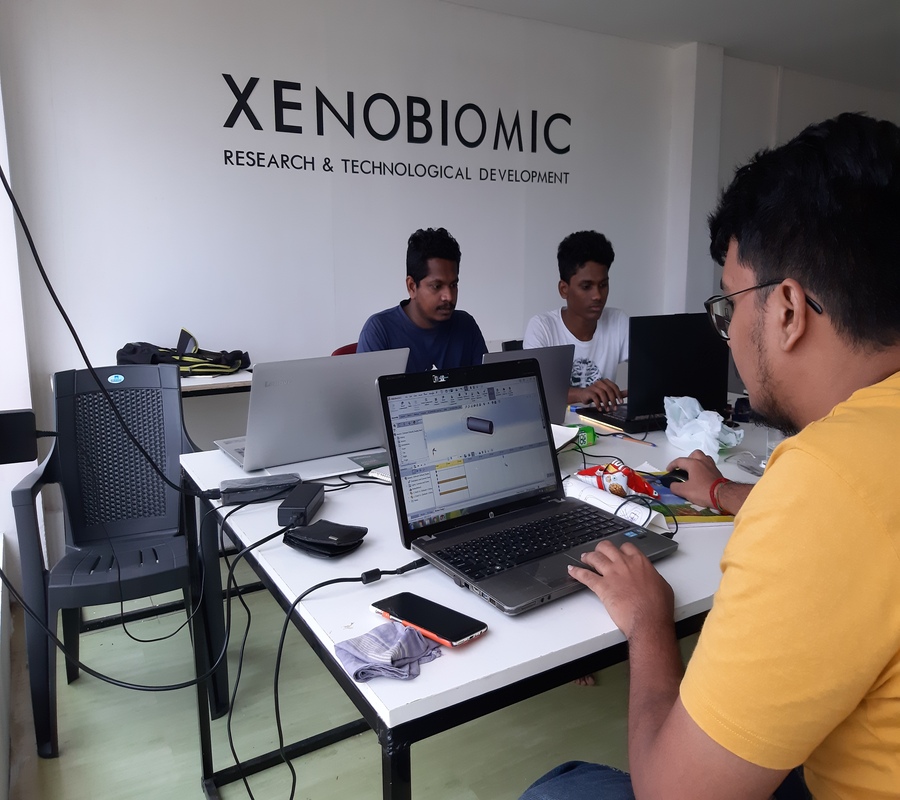
Research and development (R&D)
At the heart of innovation, our Research and Development division is committed to driving cutting-edge solutions and groundbreaking discoveries. By blending creativity, technical expertise, and a forward-thinking approach, we turn ideas into reality.
We focus on:
With a dedication to excellence and a mission to advance technology and science, we are not just solving today's challenges—we are shaping tomorrow's world.
"Committed to Managing Perfectly"—we transform research into results.